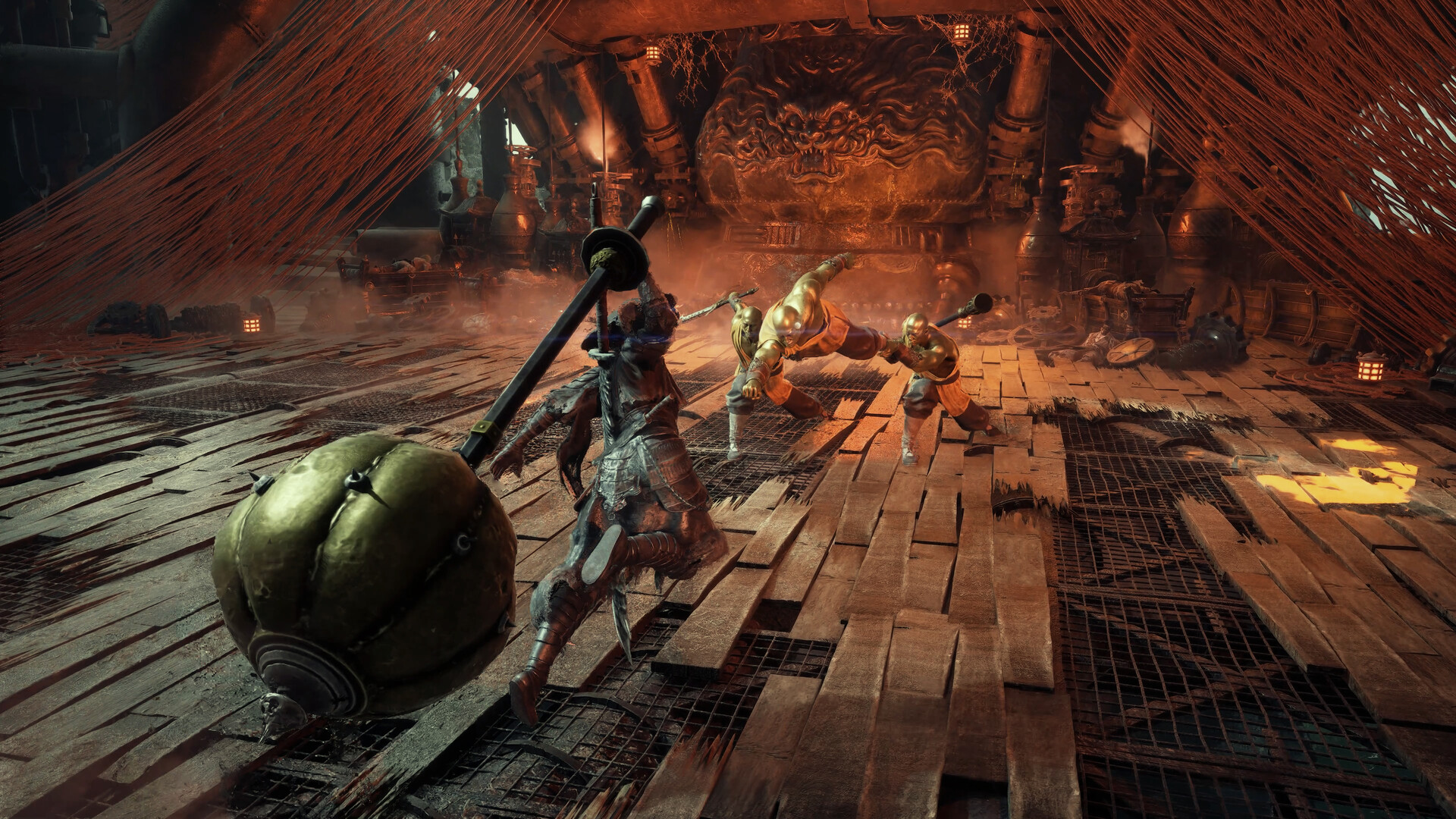
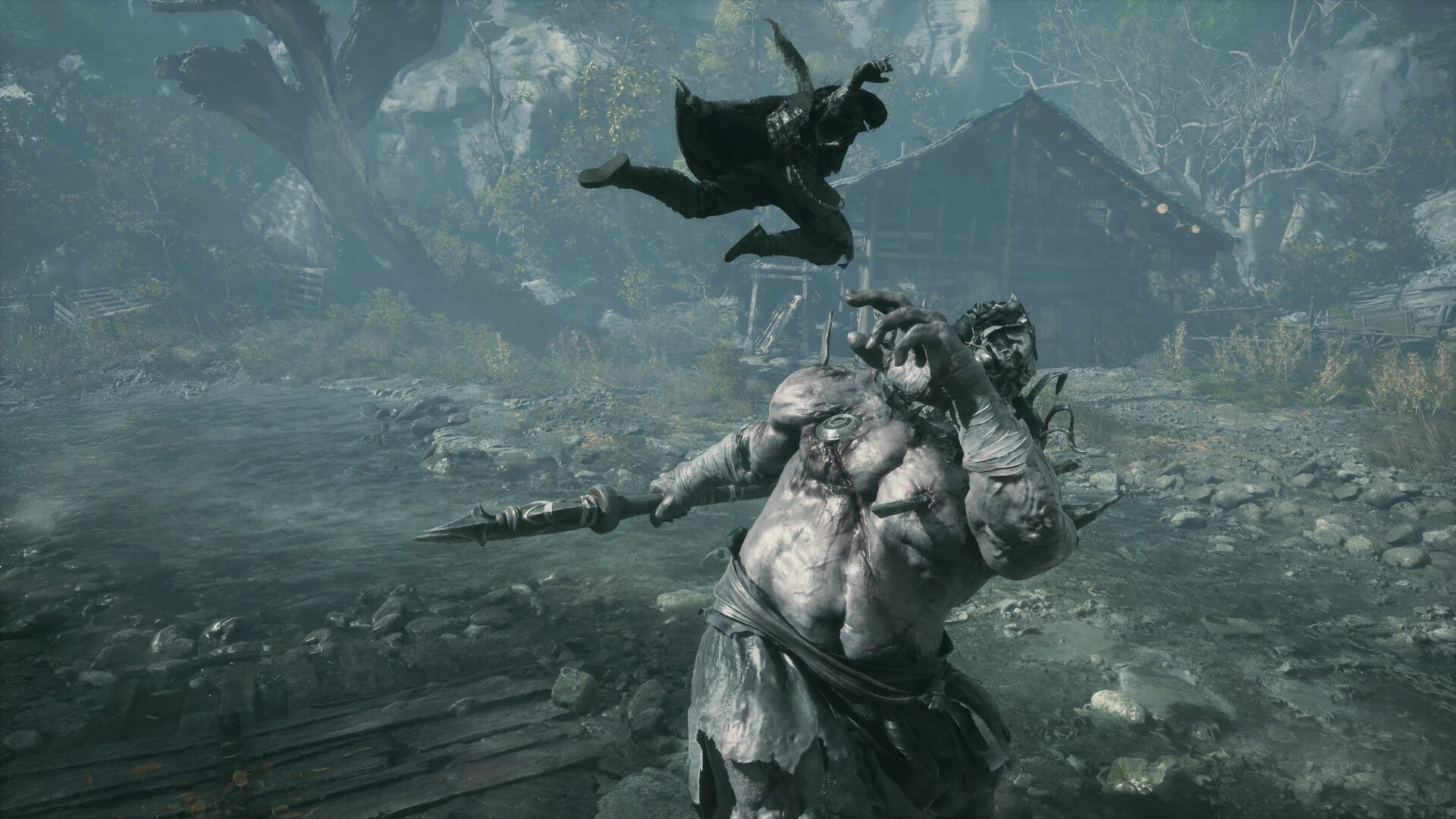
: "Every primary blade weapon in Phantom Blade Zero has a Power Surge : a unique ultimate ability tied to that specific weapon. These are powerful, cinematic attacks that can turn the tide of battle. Power Surges have their own cooldown and resource requirements, adding a strategic layer to when and how you use them. Different weapons offer different Surges, so your choice of primary blade directly impacts your available ultimates."}}]}
Phantom Blade Zero's combat is fast, technical, and deeply rewarding. Director Soulframe Liang calls it a "Wuxia Action Game": a new genre born from classic wuxia fiction and modern character-action design. Neither a Souls-like nor a traditional hack-and-slash: it's something entirely new. Learn the systems that make it tick.
Forget what you know about stamina bars and slow, deliberate combat. Phantom Blade Zero's system draws from classic character-action games (Devil May Cry, Ninja Gaiden) but marries them to a unique wuxia resource economy. Director Soulframe Liang defines it as a "Wuxia Action Game": a new genre identity that blends the heroic xiake tradition with modern action design. Three difficulty options make it accessible while still offering depth for veterans, with settings that affect enemy stats, mechanics, and AI behavior.
Aggression is rewarded, not punished. Normal attacks and dodges cost zero Shà-qì (杀氣, the game's resource). You are encouraged to stay on the offensive, flowing between light attacks, heavy attacks, and weapon swaps without pause. Blocking: not attacking: is what drains your Shà-qì and leaves you vulnerable. Soulframe Liang describes this philosophy as "Kungfupunk": ancient martial arts traditions fused with steampunk and cyberpunk sensibility.
Every entity in Phantom Blade Zero: you, enemies, bosses: is governed by two parallel resources, plus a powerful ultimate ability tied to your equipped blade.
Your standard health pool. When it reaches zero, you fall. Manage your HP through smart play; healing items and rest points (Bells) restore it. Some enemies can drain your HP in a single combo if your Shà-qì is depleted: the two resources are deeply linked.
The Shà-qì (殺氣) gauge is the game's master resource: a unique wuxia-inspired system that blends the roles of stamina, mana, power enhancement, and special-move energy into one elegant mechanic. Understanding Shà-qì management is the single most important skill in the game. The official English spelling is "Sha-chi", though both Shà-qì and Sha-chi refer to the same resource.
Every primary blade weapon in Phantom Blade Zero has a Power Surge: a unique ultimate ability tied to that specific weapon. These are powerful, cinematic attacks that can turn the tide of battle. Power Surges have their own cooldown and resource requirements, adding a strategic layer to when and how you use them. Different weapons offer different Surges, so your choice of primary blade directly impacts your available ultimates.
When your Shà-qì gauge is fully depleted, your character enters a Broken State (破防). In this state:
The same applies to enemieseplete their Shà-qì and they enter a Broken State, giving you a massive damage window. Mastering the Shà-qì economy: knowing when to block, when to dodge, and when to go all-out: is the difference between surviving and thriving.
Unlike stamina in Souls-likes (which only recovers when you stop), Shà-qì in Phantom Blade Zero regenerates faster when you're attacking. This reinforces the core design: keep the pressure on. A defensive, turtle playstyle will drain your Shà-qì and leave you broken. Go in, swap weapons, extend combos: your Shà-qì will thank you.
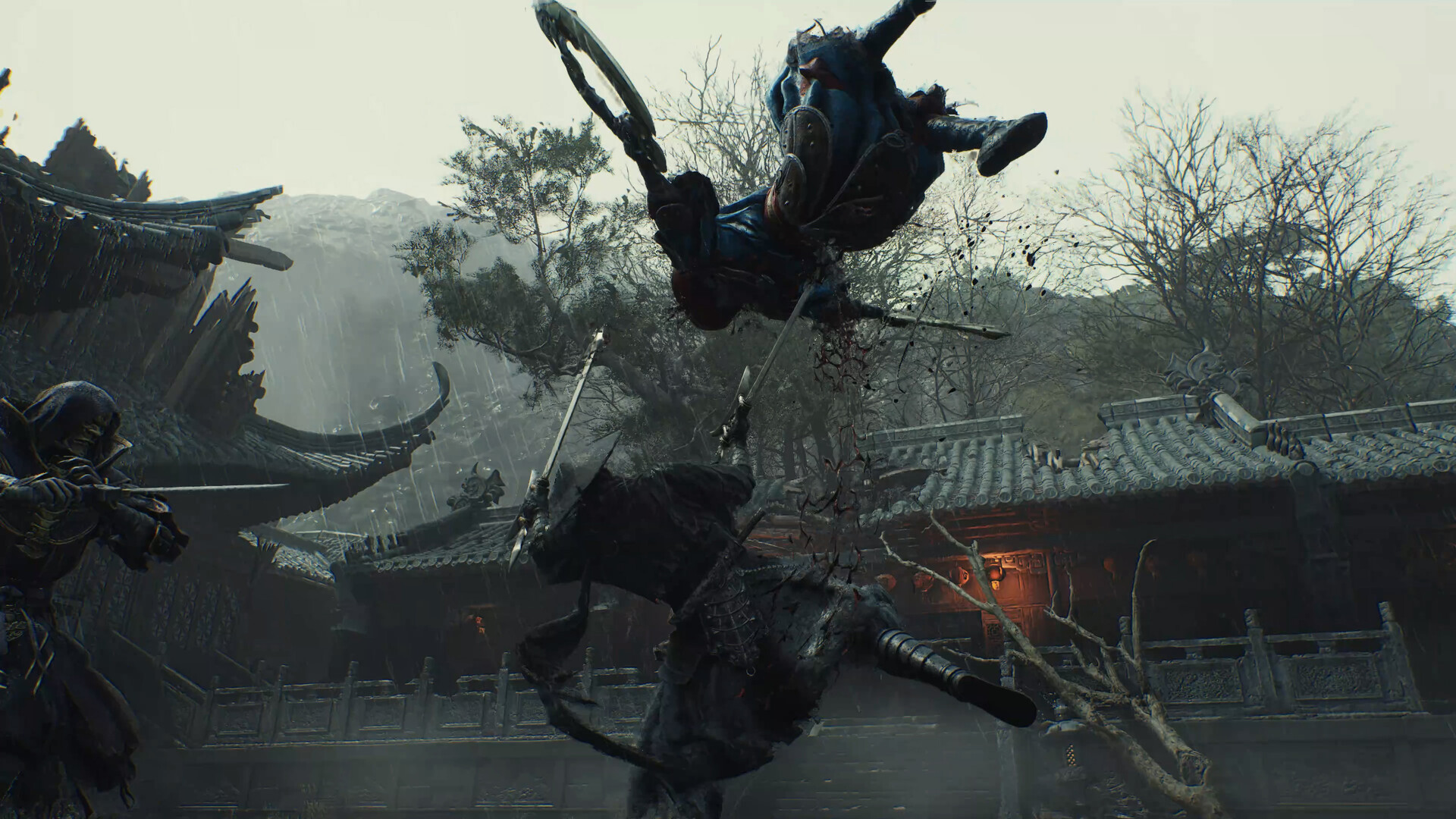
The combo chain system is Phantom Blade Zero's signature feature: the heart of what makes its combat sing.
New to character-action games? The semi-auto system helps you perform flashy sequences with simple inputs. Light attack strings chain naturally into heavy attacks, and the game's camera and lock-on keep you oriented on your target. It's approachable enough for newcomers to feel powerful from the first hour.
Beneath the accessible surface lies serious mechanical depth. Veterans can:
This is where Phantom Blade Zero's combo system truly shines. You equip two main weapons simultaneously (e.g., a longsword in slot 1, ring blades in slot 2). During any combo, you can swap weapons mid-chain to seamlessly transition into the second weapon's moveset. This creates combo possibilities that span both weapon arsenals in a single, fluid sequence.
Example: Longsword light combo → weapon swap → ring blade heavy finisher → swap back → Shadow Weapon callout. The result is a 15+ hit combo that weaves between two distinct weapon identities.
The smooth Death dual circular blades take this further: their unique property transforms your dodge into a shadow step, allowing you to maintain pressure while repositioning behind enemies. This weapon redefines mobility and is a prime example of how weapon choice fundamentally changes your combat approach.
Light Attack □/X → Heavy Attack △/Y → Weapon Swap L2/LT + Face → Shadow Weapon R2/RT. The semi-auto system will fill in gaps, but manual timing separates good players from great ones.
Defense in Phantom Blade Zero is as dynamic as offense. Three core maneuvers: block, parry, and dodge: interact with enemy attacks through a color-coded telegraph system that rewards precise reactions.
Standard blocking absorbs most incoming damage but drains your Shà-qì gauge with every hit. Block too much and you'll hit the Broken State (破防). Use blocking sparingly: it's a last resort, not your primary defense.
A well-timed parry (press block just before an attack lands) triggers a parry animation that negates all damage and stuns the attacker. Parrying a brutal move (blue cue) triggers a Ghostep: a cinematic reposition that teleports you behind the enemy for a free counterattack.
Dodging costs absolutely no Shà-qì: it's the safest and most reliable defensive option. Some enemy attacks are killer moves that cannot be blocked or parried: these are telegraphed by a red color cue and must be dodged. A perfectly-timed dodge against a killer move also triggers a Ghostep.
The Ghostep (鬼步) is a special maneuver that triggers when you perfectly counter certain enemy attacksarry a brutal move or dodge a killer move at the last instant. The result is a cinematic shadow-step that repositions Soul behind his target, creating a guaranteed damage window. Mastering Ghosteps is the key to high-level play.
Beyond moment-to-moment combat, Phantom Blade Zero has deep progression systems:
Your loadout consists of 2 primary weapons (blades) and 2 secondary weapons (Phantom Edges). Each combination creates a unique playstyle. Additionally, every blade has its own Power Surge: a unique ultimate ability tied to that specific weapon.
Choose two from over 30 confirmed weapon types. Blades are your primary tools: each with unique combo strings, movesets, and a Power Surge ultimate ability.
Each weapon has unique combos, reach, speed, and special effects. Mix and match to find your style. No quality tiers: every weapon is viable.
Secondary tactical tools with limited ammo. These are powerful but finite: use them at the right moment. Phantom Edges comprise a diverse range of weapons including cannons, lances, axes, hammers, flamethrowers, bows, and more.
20+ Phantom Edges confirmed. Ammo is shared between both equipped Edges and refills at checkpoints.
Ring Blades (main) + Longsword (swap). Phantom Edges: Bow + Flaming Head. Maximum pressure, endless combos, closing distance is your priority.
Greatsword (main) + Flexible Sword (swap). Phantom Edges: Mancutter + Bow. Bait attacks, punish with massive counters. Shà-qì management is critical.
smooth Death dual blades (main) + Ring Blades (swap). Phantom Edges: Flaming Head + Bashpole. Maximum mobility. Dodge becomes an offensive tool.
Greatsword (main) + Dual Swords (swap). Phantom Edges: Tiger Cannon + Ink Cut. Overwhelming firepower with mechanical augmentationure Kungfupunk philosophy.
Go beyond the basics. These advanced concepts will elevate your play from competent to deadly.
The Broken State isn't just a penalty: it's a win condition. Learn to read enemy Shà-qì levels:
Think of Shà-qì as a resource to spend, not a bar to keep full.
Advanced players can push beyond the semi-auto system:
Not all weapon pairs are equal. Some combos have natural synergy:
Never stop moving, never stop attacking. This is not a game where you wait for an opening: you create openings. Every dodge, every swap, every cancelled animation is an opportunity to extend your offense. Passive play is punished. Aggressive, creative play is the path to mastery.
Phantom Blade Zero is often called "Souls-like with wuxia": but the reality is more nuanced. Here's how it compares to genre titans.
| Aspect | Phantom Blade Zero | Souls-like (Dark Souls, Elden Ring) | Devil May Cry | Ninja Gaiden |
|---|---|---|---|---|
| Resource System | Shà-qì Gauge — blends stamina, mana, and power | Stamina — governs everything | Style Gauge / DT — separate resources | Ki — similar resource management |
| Combat Pace | Fast, aggressive, fluid | Slow, deliberate, methodical | Fast, stylish, aerial | Fast, brutal, punishing |
| Blocking | Costs Shà-qì — risky, not free | Free with shield, costs stamina | Royal Guard — skill-based | Block is instant, costs nothing |
| Dodging | Free — costs NO Shà-qì | Costs stamina | Free — dash/jump | Free — roll/dash |
| Combo System | Semi-auto with deep manual cancel system | Minimal — R1 spam, roll, repeat | Fully manual — style ranking, juggle system | Manual — delimbing, Ultimate Techniques |
| Weapon Swapping | Mid-combo seamless swap | No mid-combo swap | Mid-combo weapon cycle | Weapon swap on the fly |
| Difficulty Style | High skill ceiling, lower floor | High floor, high ceiling | Lower floor, infinite ceiling | High floor, high ceiling |
| Broken State | Unique Shà-qì depletion system | No equivalent | No equivalent | No equivalent |
| Monetization | None — buy-to-play | None (base game) | None (base game) | None |
Phantom Blade Zero is closest in spirit to Devil May Cry and Ninja Gaiden: it rewards aggression, style, and mechanical creativity. The Shà-qì Gauge, Broken State, Ghostep system, and color-coded attack telegraphs add a unique strategic layer that neither series has. Calling it a "Souls-like" undersells what it's trying to achieve. As Soulframe Liang says, it's a "Wuxia Action Game": a new genre category entirely. If you love character-action games with deep combo systems and resource management, this is built for you.
Explore our growing collection of Phantom Blade Zero guides to prepare for October 29.